Baudelaire, “Eminence Front” and the 1980s

I first thought the funk rock song “Eminence Front” by rock band The Who was about putting on a different face depending on who you meet, your mood, the time of day, and so on. For instance, I act one way around my family, another way around my friends, and a different way around my teachers. I wanted to compare this idea to what we discussed in a Modern Poetry class about Baudelaire and the notion of how we have different personas for different situations. It turns out the parallels between “Eminence Front” and Baudelaire are stronger than I originally thought.

In researching this post I discovered that according to the band’s leader singer, Pete Townsend, “Eminence Front” refers to what happens when someone takes too much cocaine. The chorus even reveals this idea somewhat as Townsend sings “behind an eminence front” while the lead guitarist, Roger Daltrey, simultaneously sings “it’s an eminence front,” as if they’re somehow intoxicated and “seeing double” so to speak.

Clearly this overlap shows two different sides to the same person too. But the only sources I can find claiming the cocaine connection are Wikipedia that references an article no longer available online and a Quora reply. Urban Dictionary also has a similar idea about the connection between the song and cocaine.

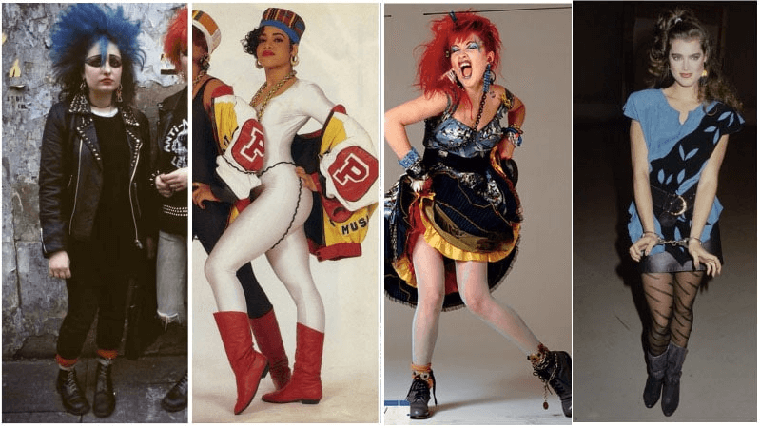
However, the idea makes sense because the song, published in 1982 also discusses the excesses of the period. The 1980s was known as “An Age of Excess” and opulence, meaning extreme wealth and glamour were at the fore of society. Everyone wanted to stand out, so even material objects needed to make bold statements. That meant objects like sunglasses were massive, shocking neon colors were the norm, and shiny materials like spandex and sparkly fabrics became common. Cocaine use was also high (no pun intended) and grew at a rapid rate.
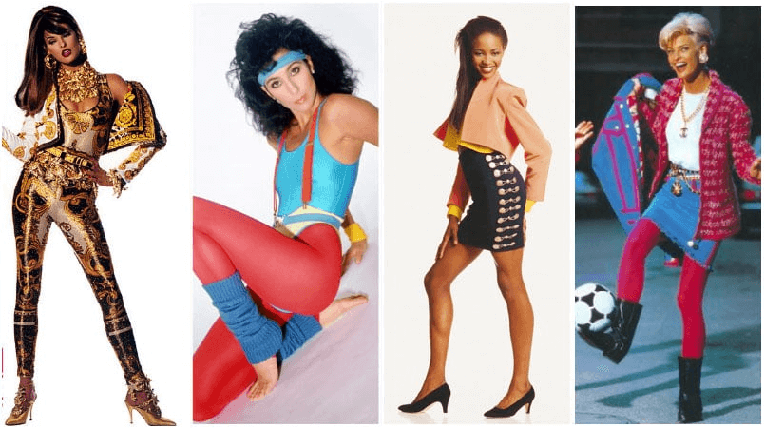
Baudelaire described a kind of character, the dandy, in “The Painter of Modern Life” who aimed at being as individual as possible through the way he dressed and acted. Dandies remind me of people from the 1980s whose goal was to stand out by being different, by attracting attention in any way necessary.

The majority of the lyrics for “Eminence Front” focus on the following:

People forget

Forget they’re hiding

Behind an eminence front

Eminence front, it’s a put on

Come on join the party, dress to kill

Partial lyrics of “Eminence Front” by The Who

“Dress to kill” is likely a double entendre, referring to the idea of dressing to stand out or living a lifestyle that could lead to death that includes dressing excessively. “People forget…they’re hiding” because they’re either high or pretending to be someone they’re not, hence they’re putting on a front. There are also single phrases like “The drinks flow” and “That big wheel spins, the hair thins.” These phrases again focus on excess, that of alcohol and gambling.

So perhaps the best term for the 1980s is “hedonism.” This concept refers to the idea that one of the best goals a person can have is to pursue pleasure and self-indulgence. This concept reminded me of the modernist Decadent movement from about 100 years earlier. It was an artistic and literary movement that focused on excessive aesthetics and artificiality, but in conflict with hedonism. It was a response to the corruption of moral and cultural decay of the late 1800s rather than a promotion of it like that of hedonism.

But “Eminence Front” reminds me of the Decadent movement because the song is also against this moral and cultural decay. In fact, the last verse before the final chorus says: “The shares crash, hopes are dashed / People forget / Forget they’re hiding.” The Who is saying that the stock market might crash but people do not care. They’re hiding behind a false sense of reality, the “Eminence Front,” or being too high on cocaine to care or recognize what the drug is doing to them. Alternative “shares” could have a more social meaning too, in terms of shared experiences or shared realities. “Shares crash” could also refer to the withdrawal symptoms (“crash”) experienced after going off a drug like cocaine in which “hopes are dashed” and the reality that person was trying to avoid sets in again.

Also from the 1800s is Charles Baudelaire who, unlike the Decadent movement or The Who, promoted the idea of pleasure, especially drug usage. In 1850, he described the effects of hashish in striking detail in “The Poem of Hashish,” saying it is a form of “slow suicide” and “magic” that is unobjectionable and helps create the “artificial ideal.” Evidence suggests Baudelaire was describing opium, however.

Ten years later, in his book, “Les Paradis artificiels” (“Artifical Paradises”) Baudelaire discusses the effects of opium and hashish and suggests drugs could assist humans in achieving an idealized world. Like the “Eminence Front,” this state would create a false or “Artificial Paradise” that in some ways may be better for some people than having to deal with reality. More interestingly, it is said Baudelaire rarely indulged in drugs despite his reputation for debauchery. Either way, Baudelaire, known for his pursuit of pleasure through alcohol and sex, suffered from chronic alcoholism and the STD, tertiary syphilis.

The link between Baudelaire and “Eminence Front” can be further seen in Baudelaire’s prose poem, “The Eyes of the Poor.” The narrator is offended by the fact the woman he was with in a cafe appears to have no empathy for the poor father and his two children looking at them through the window.

Originally, I thought “the eyes of the poor” referred to those poor people who look on at the rich hoping but knowing they can never achieve such wealth. But after analyzing “Eminence Front,” and its idea that people put on fronts to hide their true nature, I now think differently. Perhaps the one with poor eyes is the lady who fails to see the divide between rich and poor and feel empathy toward them. Instead, she requests the narrator to “ask the maître d’ to send them away.” She also fails to see how the beauty and grandeur of antique art has been reduced to advertising gimmicks to attract the likes of her but also the narrator. Being a poem, this second meaning is perhaps obvious.

But the narrator who sees all of that also partakes in the cafe by visiting it when he has a choice not to do so, unlike the poor who have none. Yes, maybe the woman he was with would leave him, but he claims he will only be offended at her for a short time. So perhaps it is he who has the “eyes of the poor,” as he is able to see the injustice of poverty, to realize its implications, but would rather partake in enjoying the splendours of wealth than not. If he didn’t see poverty as a problem or feel “a little ashamed” that he could enjoy the cafe while the poor could not, his eyes would not be poor. He is also putting on an “eminence front” and covering it under the guise of being an observer. People “forget they’re hiding,” but do they really? Are they not just pretending they’re something else, playing dumb to avoid having to deal with the realities of the modern world whether in the 1880s or the 1980s or indeed the 2010s?

Art appears to encapsulate so much meaning from so many different periods that it proves the point that art reflects humanity. “Eminence Front” is music while Baudelaire’s writing and the Decadent movement are literature, but they all fall under the category of art. Their themes of drug usage, excess, moral decay, and pretending to hide the fact one recognizes reality seem as universal today as they did back then. One still has a choice to partake in it or to avoid it. But I think these three works of art suggest a third possibility, that we have the choice to do something about addressing the realities of the modern world, good or bad, whether for ourselves or for others.

Modernity: New vs Old

The more I think about Baudelaire’s descriptions of modernity at the time he wrote in the 19th century, the more I realize how similar the world is today. Just look at the picture above, which reveals a juxtaposition we almost never think about. There is a clear distinction between new and old in this image. The smartphone signifies the present, the new, and all its possibilities for instant and endless types of communication from creation to dissemination and back. The pen and notebook, however, are limiting, quite literally. New and old thus have different benefits and disadvantages depending on how we view them.

If the pen runs out of ink then the communication possibilities end with it. Should the pages be filled with ideas then the communication once again ends. Distributing the information on those pages can never be instant, editing them impossible without messy crossings out or obvious correction fluid that invalidates any trust that the words were written by their alleged author. These issues do not exist with the new, in which information can easily be edited and distributed instantly, with questions of authenticity less of an issue. However, in 2019, the source is increasingly likely to have been hacked, the writing could be satire, or the writer could claim to be someone else either as a joke or for more sinister means. Also, I find I am better able to express my thoughts by writing with a pen and paper than I am with typing on a physical or touchscreen keyboard.

Baudelaire questioned what all the changes intended to modernize Paris might mean, whether good or bad, just as keyboards and displays have benefits and disadvantages over pen and paper. The city also revealed a juxtaposition between new and old, as new constructions overshadowed old ones or vice versa depending on one’s philosophical viewpoint.

A few days ago, one of my classmates mocked me, jokingly, by calling me an old man. You see, I’m 31 years old while she’s still a teenager, a median age for almost all of my classmates in any course. I agreed and said to her that when I graduated high school in 2006 the iPhone was a year away from its first announcement by Steve Jobs. That basically means smartphones had yet to have hit the mainstream, and the closest concept was the Blackberry that few people remember today and the younger generations mostly have never even heard existed. Those without smartphones were still using what we now call dumbphones.

In high school, I was still using dial-up internet, though that was in Zimbabwe. More developed countries in Europe and North America were mostly using DSL, ADSL, or VDSL, as fiber optic had yet to hit become the main connection.

I recall the pilot episode of CBS’s The Big Bang Theory from September 24, 2007 in which Leonard and Sheldon attempt to sell their sperm for money so they can purchase “fractional T1 bandwidth” to get “faster downloads.” T1 maxes out at a theoretical 1.544 Mbps for uploads and 1.544 Mbps for downloads, which by today’s standards is nothing. For direct comparison, according to the Speedtest Global Index, the average fixed internet speed worlwide in 2019 is almost 64 Mbps for downloads (over 41 times more than T1) and over 33 Mbps for uploads (almost 22 times more than T1). Not only that, but the prices are much lower than they were in 2007. On a side note, The Big Bang Theory concluded in 2019 despite it being one of the most successful sitcoms ever, perhaps proving the cliche that “all good things must come to an end.”

On September 26, 2006, Facebook opened to anyone aged 13 or over worldwide. It took almost two years more for it to reach 100 million users in 2008. As of June 2019, Facebook claims it has over 2.4 billion active users, over 24 times what it had about 9 years earlier.

Content creation and social media were yet to have reached any kind of widespread usage and potential when I graduated from high school. In 2006, YouTube was still largely unknown, as it only launched in 2005, as did Reddit. Twitter launched in 2006, but popular sites like Instagram and Snapchat were yet to have been created. The official launch of WordPress was in 2004, only two years before I graduated. Journalism was still thriving. Fake news meant April Fool’s jokes on the front pages of newspapers.

When I graduated from high school, the infamous Windows Vista hadn’t even launched yet, meaning Windows XP was still the most used operating system. Android and iOS were nowhere to be found. Apple only began transitioning from PowerPC (largely unknown today) to Intel processors in 2006. Most Macs were white and plastic, not metal as they have been for a few years now.

The infamous Star Wars Episode III: Revenge of the Sith only aired a year earlier, with a later DVD, not even Blu-ray release and thus no 3D. This year sees the launch of Star Wars: Episode IX – The Rise of Skywalker, which will later be available on Blu-ray and 3D.

You may be questioning what this has to do with anything? What has it got to do with Baudelaire’s views on modernity at arguably a more drastic change from past to present? He experienced a shift from non-industrialized to industrialization. What I mentioned is all part of industrialization.

My point in mentioning all these differences is to show how quickly the world is changing today. Yes, modernization brought a shock to 19th century Europe, especially as people’s ways of thinking were still limited. The concept of conceptualization was still new, underdeveloped or, for some, non-existent.

Today, the idea of concepts is normal to most. What one must realize is that the changes I mentioned revolving around the time I graduated in 2006 till now is a period of only 13 years. Drastic changes happened without us realizing, that due to their personal aspects are perhaps greater than that in Baudelaire’s time. The devices we use, our access to seemingly endless amounts of information, have changed us.

While in Baudelaire’s time, the non-nobility started to become successful, the opportunity to thrive today through the internet via platforms like blogging and vlogging, or creating apps, means almost anyone can succeed. Indeed, many billionaires derived their wealth from internet and computer-related technologies like Bill Gates, Jeff Bezos, and Mark Zuckerberg. Many YouTubers do not even have degrees, where in the near-past that was largely a pre-requisite for making the hundreds of thousands and millions many do today. To gain a following as large as theirs would require even greater success, usually in the field of book publishing or journalism where authors would engage with the same amounts of followers or even less through their published writing.

Some of the recent past has come full circle with revival of the old into something new. For instance, 2019 sees the release of remakes of the Lion King and Aladdin using computer-generated photo-imagery rather than animation, and in more detail than ever with better sound, lighting, and so on. Rockstar Games set its popular 2013 Grand Theft Auto V game in the fictitious but satirical U.S. state of San Andreas, a location it last used in 2004’s Grand Theft Auto: San Andreas, largely due to its popularity. Before such a period, popular opinion did not often drive content creation. Popular dumbphones like the Nokia 3310 have been revived too.

With successes in re-inventing the past, some failures arrived too. Boeing attempted to develop its 737 MAX by refreshing and modernizing its decades old 737 design. Unfortunately, the result was an absolute disaster, which is one of the reasons many died in resultant plane crashes. The 737 MAX has been grounded since March 2019, almost six months ago, as Boeing tries to correct the issues. But its reputation and financials have been drastically hit by its failures, failures that are on show for all to see thanks to our easy access to information.

Baudelaire also questioned whether modernity was good or bad, as he did in “The Eyes of The Poor,” though a better term would be perhaps be observed rather than questioned. In that poem, Baudelaire describes a newly built café using elements of antiquity like paintings to attract customers, essentially reducing respected art-forms into advertising. Today, marketing itself is being revived back toward creativity and art, with storytelling becoming the popular form for promoting brands and personalities.

Therefore, as Baudelaire shows in “The Eyes of The Poor,” this blend of new and old is neither good nor bad. It is our reaction to it that makes it so. The woman in the poem shows contempt toward the poor, which offends the speaker who does not show contempt but does not show much empathy either (he says he was only “a little ashamed”). Today, this divide between rich and grows wider.

I graduated from high school less than 13 years ago, and will graduate from university a little over 13 years later than that. Once again, many unexpected changes have entered our world without us fully comprehending what they mean. AI and machine learning are becoming the norm, for instance, as is the interconnected automation. Space travel as a form of tourism might soon be a thing too.

An increasing number of smartphones come with AI chips, and those that don’t have Google Voice and Apple Siri, machines as personal assistants. Along with robots like Sophia, those services reveal how human-machine interaction is soon going to be the norm.

Those same services mean George Orwell’s 1984 is becoming less satirical every day with government and corporate mass surveillance intruding into all aspects of our lives, even from countries with which we have no affiliations. In fact, this surveillance has been normalized, and evidence suggests it, alongside further issues like fake news, helped Trump gain offices.

Electric cars like Tesla’s are becoming the norm. Hoverboards are no longer science fiction out of the movies. Motion capture in film is increasing in popularity, like that used in the 2019 movie, Alita: Battle Angel, as a better alternative to CGI. Full-scale automation of jobs is becoming normal, as packing and retrieving products from shelves like Amazon’s Robots prove:

As suggested in the video, perhaps doomsday-focused entertainment like The Terminator franchise masks us from realizing more realistic and concerning technological dangers facing us today.

Social media, content created by everyday individuals or non-traditional journalists, has surpassed traditional journalism and publishing. Citizen journalism shows how traditional journalism has been left behind too. Fake news overrides all of them, unfortunately. The Big Bang Theory may have ended but its available instantly from legitimate streaming services like CBS, Amazon Prime Video, and YouTube, either free or paid.

More worryingly, scanning of personal data like passport information at airports has now been automated without the general public’s knowledge or direct agreement. Once again surveillance and privacy rights have been taken away and hidden under the guise of convenience.

Have we entered a new era and world without even realizing it? I mean, instructors and students still say “write a paper” instead of “type an essay.” We still say “write a blog post” instead of “type a blog post.” By definition, we “type” not “write” online unless we write on paper first then type that for use online. Maybe our incorrect usage of such terms reveals how we still live in the past somehow. Then again, Baudelaire did not know he was in the beginnings of what would later be termed modernism. How we would know what’s happening to us today without the power of hindsight or perhaps a highly-advanced AI able to accurately predict and tell us the future? Or, a Baudelaire?

The thing is, this new and modern world still mixed with the old is neither good nor bad, yet. Technology itself is not (yet) intrinsically bad or good either. The potential is for it to go either way because of humans. It’s what we do as a collective whole, as active global citizens in fighting for the good, that will determine whether the future is good or bad, whether the new is better than the old. Then again, what is good and who determines it?

Modernization and Modernity in Yerevan

I first visited Yerevan in 2010 and returned in 2014, which a relatively short time. But a lot changed over that brief period from a variety of angles based on modernization and modernity, including some aspects mentioned or implied by the famous French poet, Charles Baudelaire in “The Painter of Modern Life and Other Essays”.

Dandies, for instance, are noticeable in places like Northern Avenue and indoor shopping centers like Dalma Garden Mall and Yerevan Mall. These locations themselves signify a shift from traditional markets to Western-style malls, again a form of modernization. Except the dandies found here are mostly female unlike the males found in Baudelaire’s writing.

These women strut with class and confidence with a slight swagger to attract attention. They pose in coffee shops and on park benches with elegance, upright without a hint of rounded backs from slouching, appearing to observe the world pass by but in actuality attract attention due to their unique looks and poise. Some of their clothes appear expensive and thus of high quality. Others appear torn and tattered yet still pricey. Some women are immaculately groomed too, as one might expect with legs milkier white than the dairy inside their cappuccinos. Others appear almost Gothic and unkempt with their dark nails and lipstick, yet somehow that means they too are groomed.

Baudelaire says dandies have “a personal form of originality, within the external limits of social conventions” (p. 108). In Yerevan, many have different shades of dyed hair, and wear short dresses or skirts, revealing tops, tattered jeans, t-shirts with swear words printed on, and more. This kind of fashion is certainly an “opposition and revolt,” in this case against conservatism and traditions (p. 108).

This kind of fashion is certainly an “opposition and revolt,” in this case against conservatism and traditions (p. 108). When I first came to Yerevan in 2010, I do not remember this kind of dress.

In fact, I stuck out like a swollen leg wearing shorts at a time when few males did (I could count the number I saw on one hand). Now at university, I look odd for wearing jeans when most males I see are now wearing shorts. How times change!

It seems the dress code has become more open and socially acceptable and thus more modern as it has elsewhere in places like Europe. Though some of the older generation who reproach females for dressing in such ways might disagree.

In 2010, Northern Avenue was still under construction. What was there made me feel like I was in a European city, a great example of modernization. But then again, why? Why go the European route in terms of architecture when Armenian culture has its own distinct architectural cues that could have been used?

Indeed many new constructions are still being built to create “modern” buildings across Yerevan, but many locals describe them as “monstrosities” as they ruin the view of Ararat and the city too. In Research Methods we read Ter-Ghazaryan’s paper, “‘Civilizing the city center’: symbolic spaces and narratives of the nation in Yerevan’s post-Soviet landscape,” which explains the conflict between modernization and building a national identity through architecture, as well as between the political elite and residents.

This conflict is similar to that described by Baudelaire in describing how artists depict the new “in the dress of the past,” which in Yerevan’s case signifies the mentality of the historical reliance on and admiration of Europe. It also signifies internal conflicts on how the past should influence the future, which politicians view differently than citizens. Baudelaire implies one can gain inspiration from present and past, so the development of a new, modern, and distinctly Armenian architecture based on its unique past would make more sense in terms of modernizing the city (p. 107).

Indeed, a perfect example of this unity between new and old can be seen at Zvartnots Airport. When I arrived in 2010, the new airport was part-finished. The old airport with its Soviet influence had overdone its useful life, as its capacity, usability, lack of space, and style had become outdated.

When I left a few weeks later the check-in was in the old airport. But after the security I entered the newly built departures area. It was like I left the 1980s and teleported instantly into the 2010s.

I think that is a perfect example of the transformation and modernization Yerevan has undergone. When I returned to Armenia in 2014, everything was new. Unlike Dalma, Yerevan Mall, or Northern Avenue, the airport did not remind me of Dubai or Europe or the West. It was unique to me despite its European-style usability and contemporary style, because it somehow captures the warmth of Armenian hospitality representing past and present.

Baudelaire says, “He gazes at the landscape of the great city, landscapes of stone, now swathed in the mist, now struck in full face by the sun” (p. 105). To me, Baudelaire is revealing the contrast between old and new as Paris was being torn down (“the mist” that resembles the past) and reconstructed for the modern (the light of the “sun”).

In Yerevan, there is a mix of pre-Soviet, Soviet, and post-Soviet buildings. Cranes construct crude monstrosities with little or no architectural connection with other structures. Yet, buildings can look old outside but be entirely renovated inside, kind of like Yerevan and Armenia itself. Then again, many old buildings have air conditioning units hanging outside them as symbols of modernity.

Old green and white electric trolley buses have largely been replaced by modern, bright purple buses complete with air suspension and air-conditioning. Old and now pale Soviet cars converted into taxis attempt to shatter the space-time continuum by fighting over the same space of road as brand new white and shiny Yandex taxis with neither willing to yield. Some aspects modernize and some may never change.

Other technology has drastically changed Yerevan, however, like communication. In 2010, 3G was the fastest mobile connection and fiber optic connections were relatively new. Today, 4G is accessible from almost anywhere with fiber optic connections woven under the city and into almost all buildings.

My laptop’s WiFi currently shows 13 Ucom WiFi networks and thus fiber optic connections available. In 2015, public TV broadcasts switched from analogue to digital, a perfect symbol of modernization.

Armenian and Russian advertising can be seen everywhere while English branding, a sign of modernity in terms of tourism and globalization, has become more common too. The country’s largest supermarket chain, Yerevan City, uses its name pronounced in English though written with the Armenian alphabet, for example. Baudelaire’s fascination with the advertiser whom he calls an artist, M.G., leaves room for comparison with Yerevan’s advertising. Some is garish and appealing while others are bold and inspiring, almost works of art.

Then there’s trash collection too (when it used to happen). Old Soviet trucks that required manual filling by hand were replaced by modern trucks, some capable of lifting trash automatically through cranes to whisk them away. Then again, the old trash bins were solid metal that were replaced by cheap plastic garbage ones, signs of modernity yes, but not necessarily a good change. 

I find it fascinating how Baudelaire’s concepts and ideas of modernity and modernization can be seen in Yerevan today. When I visited Lisbon in 2018, I cannot see anywhere near as much resemblance, because it is has been mostly modernized and amalgamated with its past.

Yerevan is very much learning and adapting to how modernization can be achieved. The city still bears its Soviet roots. Much has been modernized from fashion to buildings to transportation, but large parts of the city still remain symbols of its Soviet past. Perhaps this article’s image reveals more than words can express. But to me, Yerevan is still in a transitory period toward modernization like that of Baudelaire’s Paris and its inhabitants.

Photo by Artak Petrosyan on Unsplash